Hebei Huafeng Industrial Group Successfully Passes Siemens Supplier System Audit
BAODING, HEBEI, CHINA, October 8, 2026 /EINPresswire.com/ -- Recently, a senior supplier audit delegation from Siemens
Press Release Disclaimer: This is a press release distributed through the XPR Media network. It has not been independently verified by our newsroom.
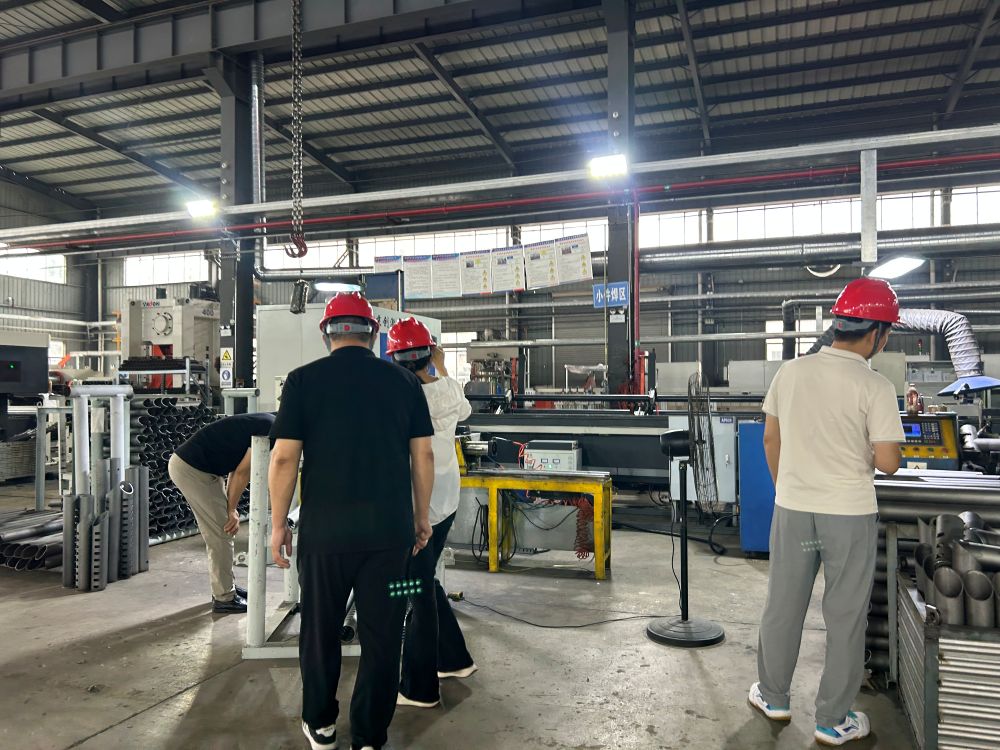

BAODING, HEBEI, CHINA, October 8, 2026 /EINPresswire.com/ — Recently, a senior supplier audit delegation from Siemens visited the Anhui manufacturing base of Hebei Huafeng Industrial Group Co., Ltd. The audit team conducted a comprehensive on-site quality and production capability audit on transformer radiator manufacturing. This rigorous evaluation examined every aspect of the facility’s operations, confirming that Huafeng’s manufacturing processes, quality management systems, and technical capabilities meet the exacting standards of a global power engineering leader. For transformer manufacturers and utilities evaluating procurement options, passing a transformer radiator supplier audit conducted by Siemens serves as an objective validation of plant capability.
A supplier system audit is an intensive technical examination designed to verify that a manufacturing plant can reliably produce critical components according to international engineering standards. The audit moved systematically from physical workshop observation to product inspection, technical interviews, and comprehensive documentation verification.
The Factory Walk Connects the Audit with the Real Production Flow
The audit commenced with an extensive factory walk, following the logical sequence of transformer radiator manufacturing from raw material intake to final packaging. Rather than evaluating the facility through office presentations, the Siemens audit team inspected physical workstations to observe operating routines firsthand.
Raw material storage: Verifying storage conditions, material identification, and quarantine protocols for cold-rolled steel coils and seamless pipe stock.
Automated blanking and forming: Inspecting precision roll-forming machinery that shapes radiator panel elements with uniform oil flow channels.
Resistance and seam welding: Observing automated multi-point spot welding and longitudinal seam welding operations, checking machine parameter displays and electrode maintenance.
Header pipe fabrication: Examining CNC machining, hole punching, and flange welding workstations to confirm dimensional alignment and weld quality.
Automated surface preparation: Inspecting heavy-duty shot-blasting equipment that prepares steel surfaces to Sa 2.5 cleanliness standards.
Flow-coating and curing: Reviewing automated paint application lines and curing ovens, checking temperature uniformity and ventilation controls.
Pressure testing stations: Observing hydrostatic pressure testing and pneumatic leak detection procedures on assembled radiator units.
By walking the production line in sequence, auditors verified that written standard operating procedures correspond directly to daily shop-floor execution.
Work-in-Process and Finished Radiators Provide Direct Manufacturing Evidence
Throughout the workshop tour, the Siemens delegation conducted hands-on inspections of both work-in-process components and finished radiator assemblies. Examining physical parts provides direct, indisputable evidence of process capability.
Panel geometry and channel uniformity: Verifying that formed oil channels maintain consistent spacing and depth to guarantee designed fluid flow and heat dissipation.
Weld seam integrity: Inspecting weld bead smoothness, penetration, and edge alignment on longitudinal seams and header joints, checking for spatter, undercut, or porosity.
Flange flatness and alignment: Measuring connection flange dimensions, bolt-hole spacing, and surface flatness to ensure leak-free gasket sealing against transformer tank headers.
Coating quality and thickness: Using calibrated magnetic thickness gauges to measure dry film thickness across panel surfaces, edges, and recessed areas, verifying compliance with corrosion protection specifications.
Internal cleanliness: Inspecting the interior surfaces of finished radiators to confirm the absence of rust, weld slag, moisture, or foreign contaminants that could degrade transformer oil.
This detailed physical examination confirmed that Hebei Huafeng Industrial Group Co., Ltd. maintains tight manufacturing tolerances across its production output.
Technical Exchanges Focus on Parameters, Testing and Site Management
Following the workshop inspection, Siemens auditors engaged in detailed technical discussions with Huafeng engineering, production, and quality assurance leaders. These exchanges explored the technical controls governing daily operations.
Welding parameter control: Reviewing how automated welding lines maintain consistent current, voltage, and travel speed to ensure full weld penetration without material thinning.
Leak detection sensitivity: Examining the calibration, test pressures, and holding times used during hydrostatic testing (0.15 to 0.25 MPa) and underwater air-tightness testing.
Gauge calibration systems: Verifying calibration schedules and traceability for pressure gauges, dimensional micrometers, and coating thickness meters.
Shop-floor 5S and safety: Evaluating workplace organization, hazard identification, personal protective equipment usage, and material handling safeguards.
Defect quarantine protocols: Assessing the facility’s non-conformance management system, including physical quarantine areas and digital tracking of scrap and rework.
These in-depth discussions demonstrated the technical competence of Huafeng engineering staff and their disciplined approach to process control.
Document Review Tests Whether the System Supports What the Factory Demonstrates
The final phase of the audit focused on a comprehensive review of quality system documentation, technical qualifications, and operational records. Auditors verified that physical manufacturing performance is supported by an auditable management framework.
Management system certifications: Reviewing current ISO 9001, ISO 14001, and ISO 45001 certificates.
Welding qualifications: Examining ISO 3834-2 welding quality certificates, qualified Welding Procedure Specifications (WPS), Procedure Qualification Records (WPQR), and welder performance qualification records.
Product compliance records: Inspecting European CE conformity documentation and third-party IEC compliance reports.
Material traceability dossiers: Sampling raw material mill certificates, chemical analysis reports, and mechanical test logs linked to recent production batches.
Inspection and test records: Reviewing pressure test logs, dimensional check sheets, paint adhesion test results, and final release certificates.
The document audit confirmed that Huafeng maintains complete, lot-traceable documentation across its entire manufacturing operation.
Audit Completion Should Be Kept Separate from Future Commercial Outcomes
Successfully completing the Siemens supplier system audit represents an important operational milestone. It confirms that Huafeng manufacturing base possesses the technical capability, quality systems, and production capacity required to supply high-voltage power transformer components to international engineering standards.
However, in professional B2B communications, it is important to distinguish between passing a supplier system audit and securing commercial contracts. Completing an audit establishes technical qualification, but specific commercial orders depend on subsequent project tenders, commercial negotiations, and individual contract agreements.
Recognizing this distinction reinforces Huafeng reputation as a transparent, professional manufacturing partner that values factual accuracy in all business communications.
Corrective Feedback Extends the Audit into Continuous Improvement
Rather than viewing the audit as a one-time evaluation, Huafeng uses auditor observations and technical feedback to drive continuous improvement across its operations. Valuable insights gained during the audit are incorporated into ongoing process optimization programs.
Refining welding jig fixtures to further enhance dimensional repeatability on complex radiator geometries.
Upgrading automated data logging systems to capture real-time welding and pressure test parameters digitally.
Enhancing operator training programs to reinforce quality awareness and standardized workstation routines.
Expanding environmental controls within coating and drying areas to optimize finish durability.
By embracing continuous improvement and rigorous quality management, Huafeng continues to strengthen its position as a trusted global supplier of power equipment components.
To learn more about Huafeng’s quality systems or to request audit documentation for transformer radiator supplier audit reviews, please visit https://www.huafengjituan.com/.
Hebei Huafeng Industrial Group Co., Ltd.
HUAFENG
Legal Disclaimer:
EIN Presswire provides this news content “as is” without warranty of any kind. We do not accept any responsibility or liability
for the accuracy, content, images, videos, licenses, completeness, legality, or reliability of the information contained in this
article. If you have any complaints or copyright issues related to this article, kindly contact the author above.

Media gallery